



Alankaram: Sacred Colours and Motifs in Temple Sarees
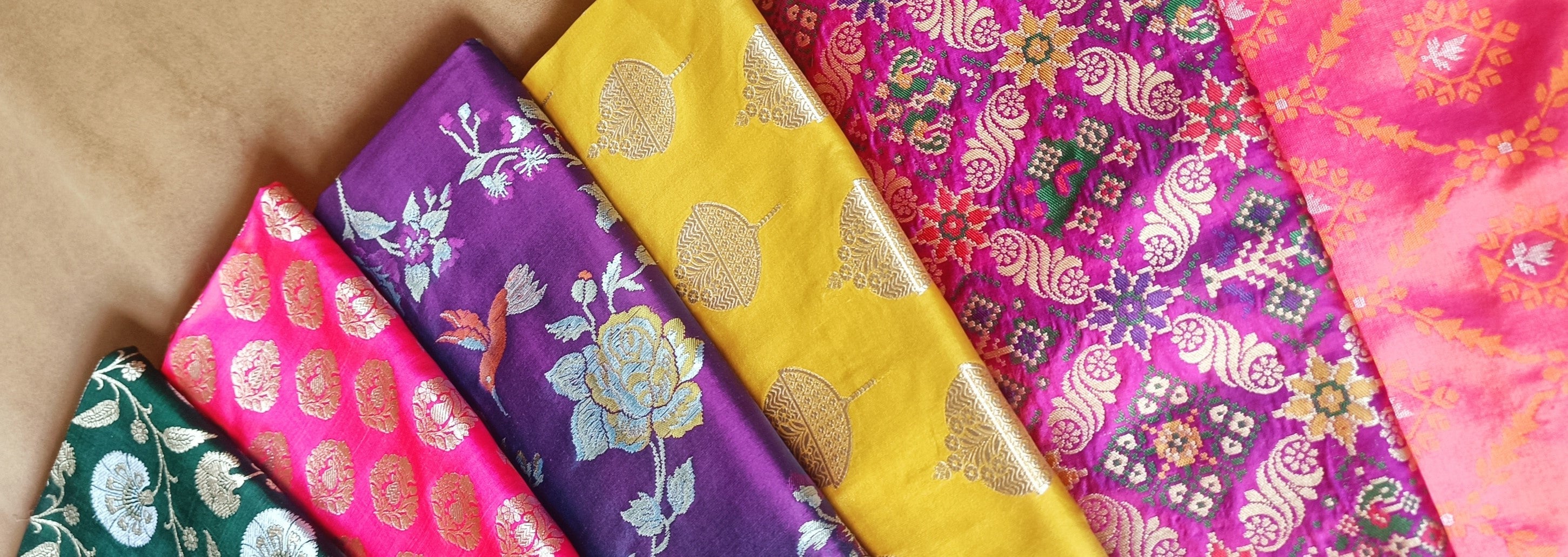
Among the many traditions that shape India’s textile heritage, few are as evocative as the story of temple sarees. These textiles were never created merely as garments; they were offerings — woven with devotion and meant to adorn the divine. Over centuries, the colours, motifs, and weaving techniques used in temple cloths influenced some of the most celebrated Indian handloom sarees, particularly the iconic Kanchipuram silk sarees.
Today, many temple inspired sarees continue to carry echoes of these traditions. Their rich palettes, symbolic borders, and intricate zari work reflect a design language shaped inside temple sanctums and perfected on the loom. In many ways, these heritage silk sarees are living reminders of a cultural tradition where craftsmanship and devotion have always been closely intertwined.
The Sacred World of South Indian Temple Textiles
For centuries, temples in South India functioned as vibrant cultural centres that influenced art, music, and craft traditions. Among these, South Indian temple textiles hold a special place.
In temple rituals, the deity is treated like a living sovereign. Each day involves ceremonial offerings, including the ritual of Alankaram — the sacred act of adorning the deity with jewellery, flowers, and silk garments. In this moment, a temple silk saree becomes part of a spiritual transformation, allowing the divine presence to appear in a visible, regal form.
Weavers from nearby communities created these textiles with extraordinary care. Their work often included intricate motifs and elaborate zari borders that reflected mythology, philosophy, and the architectural beauty of the temples themselves.
Occasionally, rare examples of these textiles survive. At the Varadarajaswami Temple in Kanchipuram, temple archives once revealed nearly century-old silk garments used in ritual adornment. Though most temple cloths eventually disintegrate with time, these preserved pieces provide a glimpse into the richness of early Kanjivaram temple saree traditions.
One such textile, a golden-orange Vallavattu, features a striking border depicting a lion and a deer drinking peacefully from the same forest pool. The imagery is deeply symbolic: predator and prey coexisting in harmony under divine grace. In this way, a temple motif saree becomes more than decoration — it becomes storytelling woven into silk.


Handwoven Temple Kanjivaram silk Ganga jamuna Temple Kanjivaram silk Handwoven Temple Gadwal silk
Sacred Colours in Indian Textiles
Temple sarees are instantly recognizable for their powerful colour palettes. These hues are not chosen at random; they belong to a long tradition of sacred colours in Indian textiles, each associated with mythology and divine symbolism.
Ivory and Red — The Grace of Devi
Soft ivory paired with vermilion red is often associated with Parvati and other benevolent forms of the Goddess. Ivory represents serenity and purity, while red symbolises shakti, the divine feminine energy.
Many traditional Indian sarees draw from this palette. An ivory silk saree with a crimson border remains one of the most elegant and ceremonial combinations in Indian textile tradition.

Crimson and Blood Red — The Power of Durga
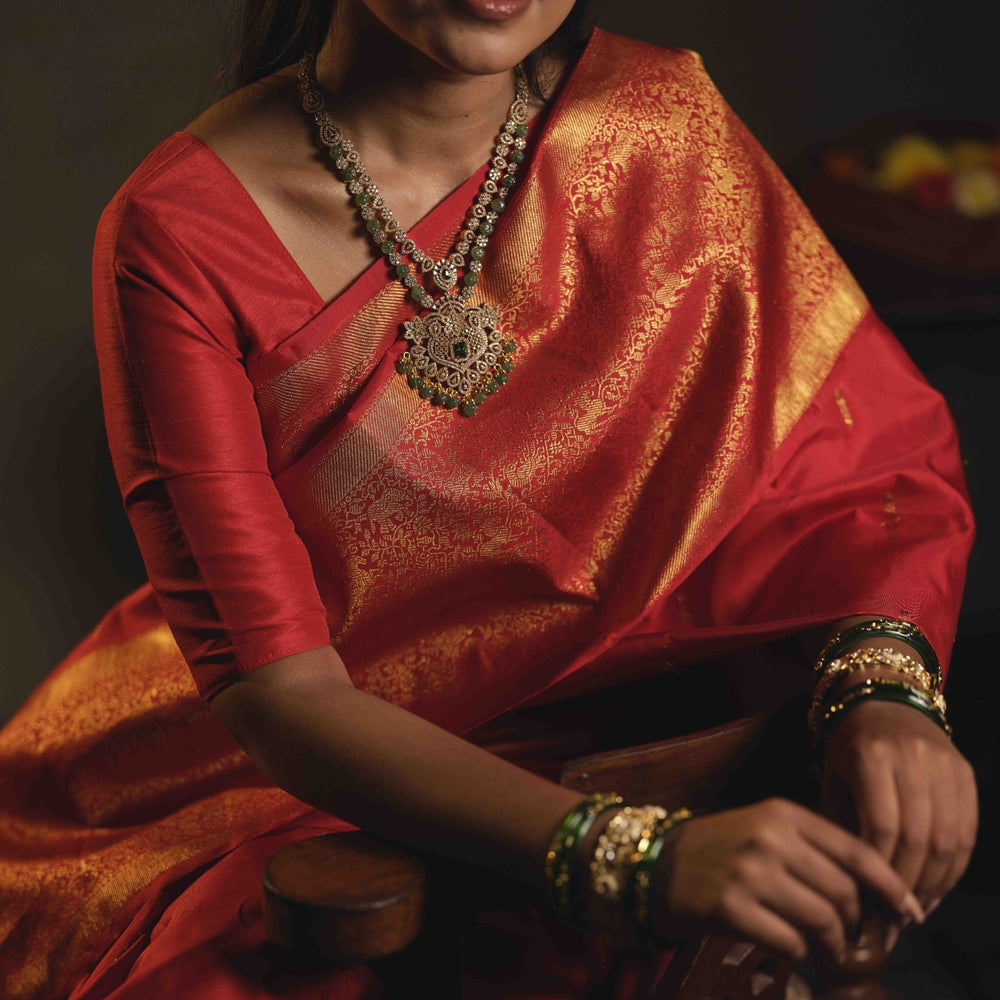
Deep maroon and crimson shades are linked with the fierce energy of Durga and Kali. In temple rituals, red represents strength, vitality, and protection. It is also why red dominates Indian bridal traditions.
A richly woven Kanjivaram temple saree in deep maroon with gold zari borders reflects this powerful symbolism — combining visual drama with cultural depth.

Meenakshi Pachai — Sacred Temple Green
One of the most iconic colours in temple weaving is Meenakshi Pachai, the vibrant emerald green associated with the goddess Meenakshi of Madurai. Green symbolises fertility, renewal, and prosperity.
Temple silks frequently pair this shade with ruby reds or luminous gold borders, creating the dramatic contrasts often seen in classic Kanchipuram silk sarees.

Royal Blue with Pink or Mustard — The Abundance of Lakshmi
Deep jewel-toned blues and greens are often linked to Lakshmi and Amman, goddesses associated with abundance and prosperity. In temple textiles, these colours are frequently paired with vibrant pink or mustard borders.
These bold combinations have become some of the most recognisable palettes in heritage saree collections India, where tradition and visual splendour meet.

Saffron and Gold — Radiance of the Divine
Saffron symbolises spirituality and devotion, while gold represents divine light and purity. When woven together through intricate zari work, the result is a luminous silk textile reserved for important rituals and festivals.

Motifs That Carry Meaning
Beyond colour, temple sarees are also defined by their motifs. Many of these designs originate from temple architecture and sculpture.
The yali, a mythical guardian creature carved into temple pillars, symbolises strength and protection. Peacock motifs, associated with Saraswati and Murugan, represent beauty and wisdom. The lotus, one of the most enduring motifs in Indian art, signifies purity and spiritual awakening.
These symbolic designs transform a saree into a narrative object. A temple motif saree often carries fragments of mythology, philosophy, and regional identity within its weave.


A Living Handloom Legacy
Even today, temple aesthetics continue to influence the design of Indian handloom sarees. The colours, borders, and motifs once created for ritual adornment are now part of everyday wardrobes and special occasions alike.
Modern weavers continue this legacy through handcrafted silk sarees India, ensuring that centuries-old techniques remain alive on the loom. For those who appreciate authentic craftsmanship, these sarees represent more than fashion — they are cultural heirlooms.
Exploring authentic Kanjivaram sarees online or discovering new pieces at a premium handloom saree store allows today’s wearer to participate in a tradition that stretches back centuries.
Because ultimately, the story of temple textiles is not just about devotion or design. It is about continuity — the quiet, enduring thread that connects the temple sanctum, the weaver’s loom, and the saree draped today.